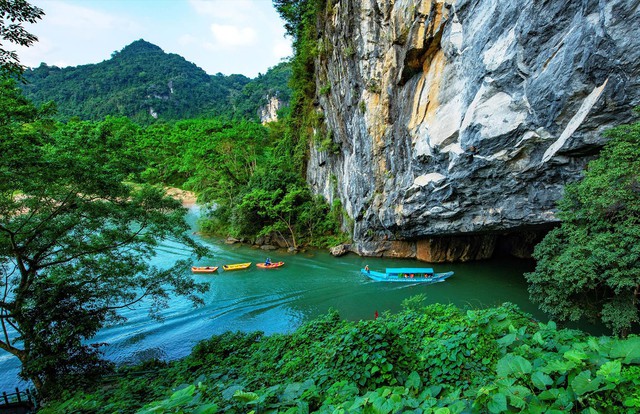
Quang Binh
Phong Nha - Ke Bang National Park
Detailed Brief
Phong Nha - Ke Bang National Park is a UNESCO World Natural Heritage area known for ancient karst systems, extensive cave networks, and globally significant biodiversity.
DETAILED SUMMARY OF PHONG NHA - KE BANG NATIONAL PARK
I. GEOGRAPHIC LOCATION AND OVERVIEW
1. Location
The park is in Quang Binh Province in central Vietnam and borders the Hin Namno conservation landscape in Laos.
2. Scale
It includes one of Asia's largest limestone mountain zones, vast primary forests, and a very dense cave network.
II. GEOLOGY AND CAVE SYSTEMS
1. Geological history
The karst system has developed over hundreds of millions of years, with significant stages from Paleozoic periods onward.
2. Representative caves
Global and regional highlights include:
- Son Doong Cave, the largest known natural cave passage by volume
- Phong Nha Cave, famous for underground river scenery and speleothems
- Paradise Cave, one of the longest dry cave systems in Asia
- En Cave, a major expedition cave in the broader network
III. ECOLOGICAL VALUE
1. Biodiversity
The park supports:
- High plant diversity with many rare species
- Mammals, birds, reptiles, and amphibians of conservation concern
- Important forest ecosystems in mountainous tropical conditions
2. Landscape diversity
Beyond caves, the park contains:
- Dense tropical forests
- River valleys and springs
- Complex limestone ridges and hidden sink landscapes
IV. WORLD HERITAGE STATUS
UNESCO recognition milestones:
- 2003: Inscribed for geology and geomorphology
- 2015: Extended criteria for biodiversity and ecosystem values
V. TOURISM AND EXPLORATION
1. Mainstream visitation
Common experiences include:
- River boat access to show caves
- Boardwalk cave tours
- Nature streams and adventure lines in designated zones
2. Expedition tourism
Advanced programs include multi-day cave expeditions and wilderness trekking that require permits, safety protocols, and high physical readiness.
VI. MANAGEMENT CHALLENGES
Core pressures include:
- Climate-related ecological stress
- Tourism carrying-capacity limits in sensitive cave environments
- Long-term protection of fragile speleothem systems
VII. CONSERVATION PRIORITIES
Current priorities involve:
- Zoning and controlled access
- Scientific monitoring of cave microclimates
- Forest and wildlife protection partnerships
- Responsible tourism standards
VIII. SIGNIFICANCE
Phong Nha - Ke Bang is one of Vietnam's top natural heritage assets and a flagship destination for science-based ecotourism and responsible adventure travel.
Related Destinations
View all destinations

Suggested 3-day execution blueprint
Day 1: Arrival and contextual orientation
Focus on broad place understanding, visual orientation, and low-intensity movement to adapt quickly.
Day 2: Signature experiences
Allocate premium time blocks for top activities and preserve one flexible slot for weather adaptation.
Day 3: Depth and transition
Complete one deep-dive visit in the morning and schedule transfer to the next stop with recovery margin.
High-priority activities to place in Day 2
Cave explorationJungle trekkingRiver and spring activitiesAdventure expeditions
Pre-departure checklist for this stop
- •Book high-demand activities and transport before confirming optional add-ons.
- •Review weather pattern for this destination and prepare one indoor fallback block.
- •Keep one low-intensity session before any long transfer to maintain route quality.
- •If traveling with a group, split responsibilities for tickets, luggage, and check-in logistics.