← Back to list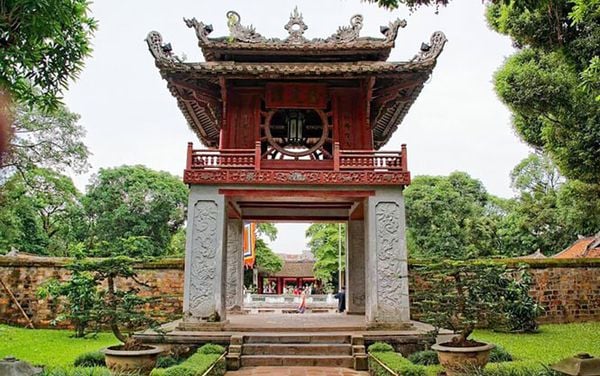
Hanoi
Temple of Literature
Overview
DETAILED SUMMARY OF THE TEMPLE OF LITERATURE
I. GEOGRAPHIC LOCATION AND OVERVIEW
1. Location
The site is in central Hanoi, south of the old Thang Long imperial core, within the modern Dong Da district area.
2. Institutional meaning
The complex combines:
- Van Mieu, dedicated to Confucius and scholars
- Quoc Tu Giam, the earliest royal academy model in Vietnam
II. HISTORICAL FORMATION
1. Ly Dynasty foundation
- Van Mieu was established in 1070.
- Quoc Tu Giam was established in 1076 and gradually expanded from elite education to broader merit-based scholarship.
2. Later dynastic development
Under later dynasties, doctoral examinations and scholar records became central to the site's prestige.
III. SPATIAL ORGANIZATION AND ARCHITECTURE
The complex is organized in five sequential courtyards along a north-south axis.
1. Entrance court
Formal gate approach with tree-lined paths and ceremonial orientation.
2. Khue Van Pavilion area
An architectural icon of Hanoi with balanced proportions and symbolic educational meaning.
3. Doctoral stelae court
The Thien Quang Well area is surrounded by 82 stone stelae mounted on turtle pedestals, recording doctoral laureates.
4. Main worship court
Ritual space dedicated to Confucius and notable scholars.
5. Quoc Tu Giam zone
Historically linked to teaching and student life, now interpreted through commemorative spaces and educational displays.
IV. DOCUMENTARY HERITAGE VALUE
The system of 82 doctoral stelae has received international documentary recognition for its educational and historical record value.
V. CULTURAL LIFE AND VISITOR EXPERIENCE
Popular activities:
- Architectural and historical tours
- Traditional calligraphy events
- Cultural performances in festival periods
VI. EDUCATIONAL SYMBOLISM
The site remains a major symbol of:
- Respect for learning
- Examination culture in Vietnamese history
- Continuity of scholarly identity
VII. CONSERVATION AND MANAGEMENT
Current management focuses on:
- Protection of stone inscriptions and wooden architecture
- Visitor circulation in peak season
- Heritage interpretation for younger audiences
VIII. CONTEMPORARY SIGNIFICANCE
The Temple of Literature is one of Hanoi's most meaningful cultural landmarks, bridging history, education, ritual memory, and civic identity.
Gallery

Best time to visit
September to November or Lunar New Year season
Tour Highlights
Duration
1 - 3 Days
Best Suited For
Families, Couples
Experience activities
- •Historic courtyard tour
- •Calligraphy experience
- •Learn examination history
- •Cultural photography