← Back to list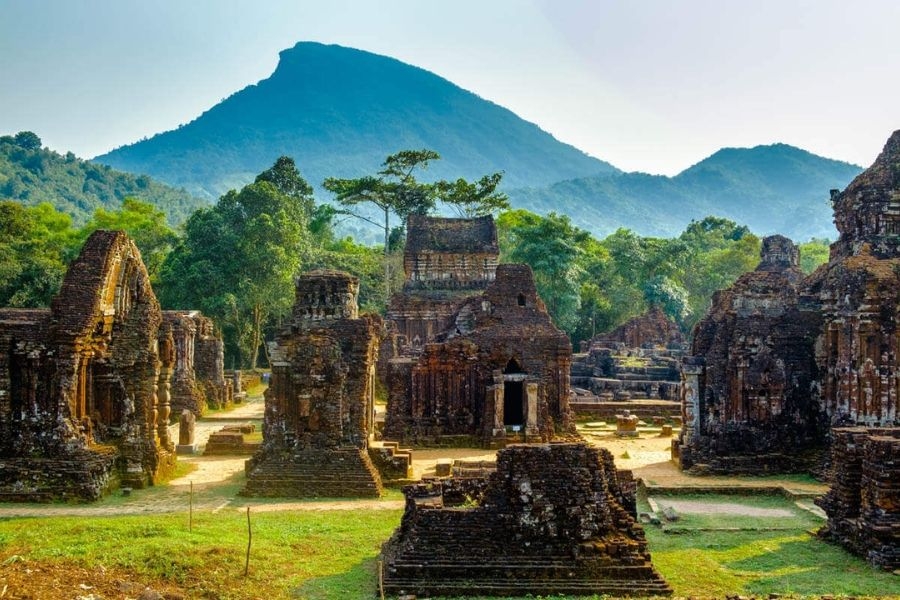
Quang Nam
My Son Sanctuary
Overview
DETAILED SUMMARY OF MY SON SANCTUARY
I. GEOGRAPHIC LOCATION AND OVERVIEW
1. Location
My Son Sanctuary is located in a valley in Duy Phu commune, Duy Xuyen district, Quang Nam Province, not far from Da Nang and Hoi An.
2. Site character
The complex consists of brick temple towers used historically for Cham royal ritual and religious activities.
II. HISTORICAL DEVELOPMENT
1. Foundation and expansion
Construction began around the 4th century and continued in phases into the 13th and 14th centuries under successive Champa rulers.
2. Decline and rediscovery
After political shifts in the region, the sanctuary was gradually abandoned and overgrown before being documented again in the modern era.
III. ARCHITECTURE AND ART
1. Temple-tower structure
Cham architecture at My Son is known for:
- Fired-brick construction with very tight joints
- Complex tower composition and symbolic vertical hierarchy
- Distinctive structural and decorative systems
2. Carving and iconography
Decorative programs include:
- Floral and geometric motifs
- Hindu deities
- Dancers and ritual figures
- Animal symbolism linked to sacred narratives
IV. WORLD HERITAGE RECOGNITION
UNESCO inscribed My Son Sanctuary in 1999 as a World Cultural Heritage site for its exceptional testimony to cultural exchange and the Champa civilization.
V. WAR IMPACT AND CONSERVATION
1. Damage history
The original complex had many more structures than survive today due to severe wartime destruction.
2. Conservation programs
Current restoration involves long-term international cooperation and specialized methods for masonry stabilization and moisture control.
VI. VISITOR EXPERIENCE
Typical activities include:
- Walking heritage routes through temple groups
- Learning Cham history and religion
- Watching traditional dance performances in designated visitor areas
VII. CULTURAL SIGNIFICANCE
My Son is one of Vietnam's most important sites for understanding pre-modern state formation, religious exchange, and regional maritime cultural networks.
VIII. MANAGEMENT PRIORITIES
Key priorities include:
- Structural safety of surviving towers
- Climate and biological weathering control
- Visitor flow management in fragile zones
IX. BROADER VALUE
- Core evidence of Champa artistic achievement
- Major educational resource for archaeology and architecture
- Essential stop in central Vietnam cultural itineraries
Gallery

Best time to visit
February to April
Tour Highlights
Duration
1 - 3 Days
Best Suited For
Families, Couples
Experience activities
- •Explore Cham temple towers
- •Learn Champa history
- •Watch traditional performance